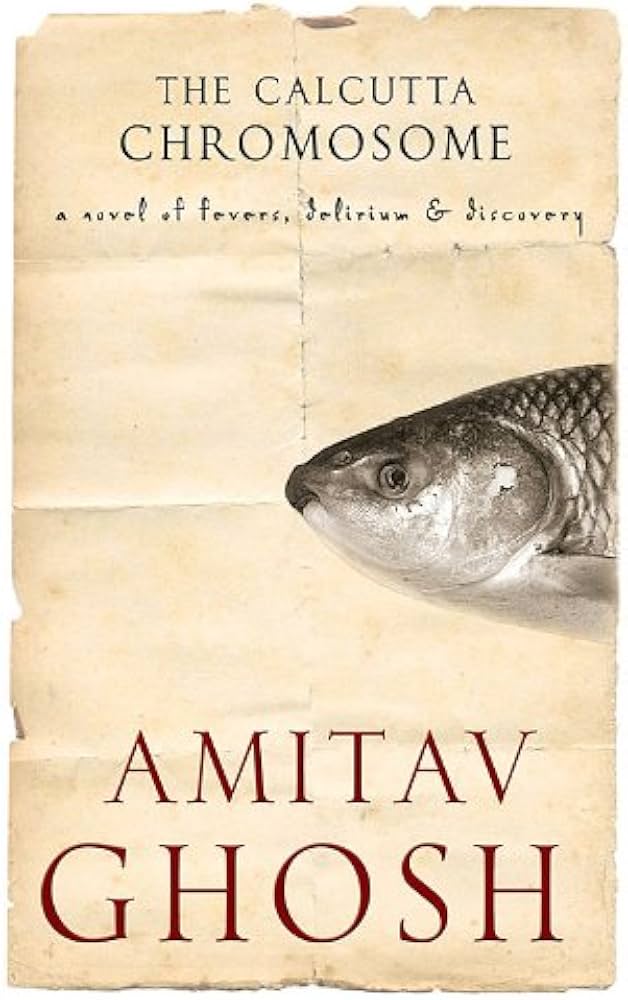
The Calcutta Chromosome by Amitav Ghosh is a unique and engaging novel that blends mystery, science fiction, history, and a touch of horror. Very different from my favourite The Glass Palace, this novel shows Ghosh’s ability to work across genres with ease. The Calcutta Chromosome is a thought-provoking and original read that rewards but with careful attention.
The story begins with Antar, an employee of the International Water Council, working alone in his New York apartment. While going through routine data, he comes across a burnt ID card that reminds him of Murugan, a former colleague who was deeply interested in the work of Ronald Ross and had gone to Calcutta to uncover the real story behind Ross’s discovery of how malaria spreads.
The novel moves across different times and places, including New York, Calcutta, Alexandria, and Renupur, shifting between the late 19th century and the near future. It introduces a wide range of characters — from scientists and archivists to spiritualists and colonial officers — all connected in unexpected ways. The story weaves together themes like disease, science, superstition, and the supernatural.
At the center of the novel is the idea of the ‘Calcutta Chromosome’, a mysterious concept that challenges modern science. It suggests knowledge and even immortality that exists outside normal scientific understanding. The book quietly questions how people write history and whether they have overlooked important contributions, especially from non-Western figures.
The writing is fairly fast-paced, though the frequent shifts in time and perspective can feel confusing. Still, this complexity can keep the reader involved and curious. There are moments of suspense and fear, balanced with touches of humor, making the story both intense and interesting. I will read the novel again after a year, maybe.